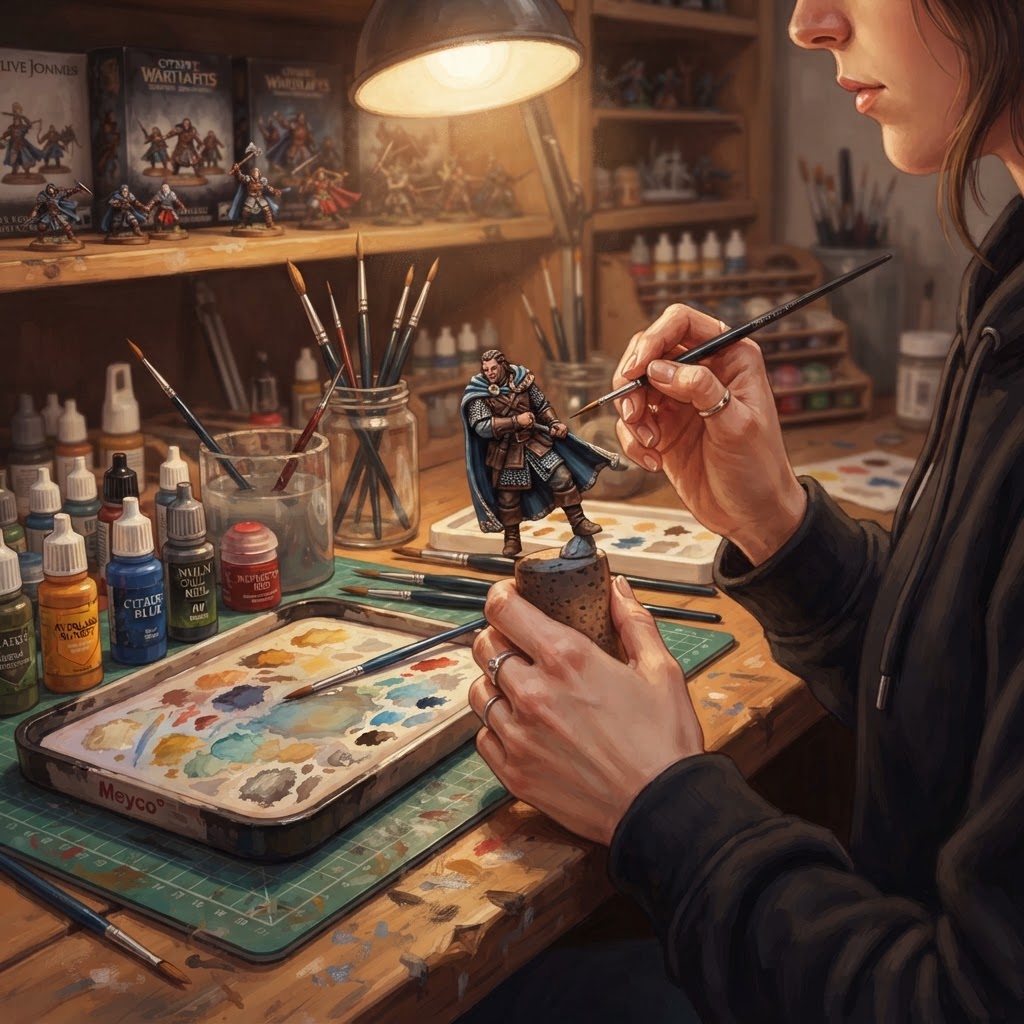
What You Need
Painting miniatures is a gentle, rewarding hobby, and the barrier to entry is lower than it looks. To paint your first model you need only a handful of things:
- A plastic or resin miniature, cleaned and assembled
- A primer spray or brush-on primer
- A small set of acrylic paints (a dozen colours is plenty to start)
- Two or three good-quality brushes in different sizes
- A wet palette or a smooth tile for thinning paint
- Water pots, paper towel, and good lighting
Preparing the Miniature
Before a drop of paint touches the model, make sure it is clean. Plastic miniatures often have thin lines of excess plastic called mould lines where the two halves of the mould met. Scrape these off gently with a hobby knife or a mould-line remover, working away from yourself.
Wash the miniature in warm water with a drop of dish soap to remove mould release agent and skin oils. Let it dry completely. A clean, smooth surface is the foundation of a good paint job.
Priming
Primer is not paint — it is an adhesive layer that gives the paint something to grip. Spray a thin, even coat over the miniature in a well-ventilated space, rotating the model. Several light coats are far better than one heavy coat, which can fill in fine detail.
Black primer gives deep shadows and a dramatic look. White or grey primer makes colours appear brighter and more true. For your first model, a grey or white primer will help you see what your paints actually look like.
If the primer goes on looking dusty and rough, it is too humid or too cold. Wait for a better day or use a brush-on primer indoors.
Base Coating
The base coat is your first layer of colour on each area of the miniature. Thin your paint slightly with water on your palette so it flows smoothly — paint straight from the pot is too thick and obscures detail. Two thin coats always beat one thick one.
Work from the inside out: skin first, then clothing, then armour, then the smallest details last. If you make a mistake, let it dry and paint over it. Patience is the most important tool on your desk.
Washes and Highlights
A wash is a thin, watery paint that flows into the recesses of the miniature, instantly creating shadows and depth. Apply a brown or black wash over skin, leather, and cloth, and a blue or black wash over metal. This single step transforms a flat base coat into something that looks three-dimensional.
Once the wash is dry, add a highlight: a lighter version of each colour applied to the raised edges and surfaces that catch the most light. This pushes the contrast further and makes the miniature pop on the tabletop. A simple drybrush — dragging a nearly dry brush with lighter paint across raised surfaces — is the easiest way to start.