Why Collect?
Miniatures are the physical anchor of a tabletop game. A painted model on the board turns an abstract combat into a scene you can see, and a shelf of painted figures is a record of the campaigns you have played. For many, collecting becomes a hobby that runs alongside the game itself.
D&D miniatures also carry history. A lead dragon from the 1980s, a rare prepainted figure from a discontinued set, a hand-sculpted dragonborn from a one-person studio — each piece is a small artefact of the hobby's evolution. Collecting is a way to hold that history in your hand.
Types of Miniatures
Miniatures come in several materials and scales. Plastic is the most common today — affordable, durable, and easy to glue. Resin holds finer detail and is favoured for display pieces, though it is more brittle. Metal (lead and lead-free pewter) was the standard for decades and remains prized by collectors of older ranges.
The most common scale for D&D is 28mm heroic, roughly 1:56, though 32mm and 15mm exist too. Most official D&D and compatible miniatures are designed to this scale, so figures from different ranges will sit reasonably well together on the same table.
Rare and Vintage Finds
Older miniature lines — Grenadier, Ral Partha, Citadel's early fantasy ranges — are highly sought after. These figures were often sculpted by hand and cast in metal, and many are no longer produced. Finding one in good condition is a genuine thrill.
Condition matters. A miniature with its original packaging, an unassembled sprue, or a clean paint-free surface commands a premium. A lovingly painted vintage figure can be beautiful but is usually worth less to a collector than the bare metal. Know which you are buying and what you are paying for.
Provenance is part of the value. A figure you bought new in 1985 is worth more to you than the same figure found loose in a box at a car-boot sale — and the story is part of the collection.
Storage and Display
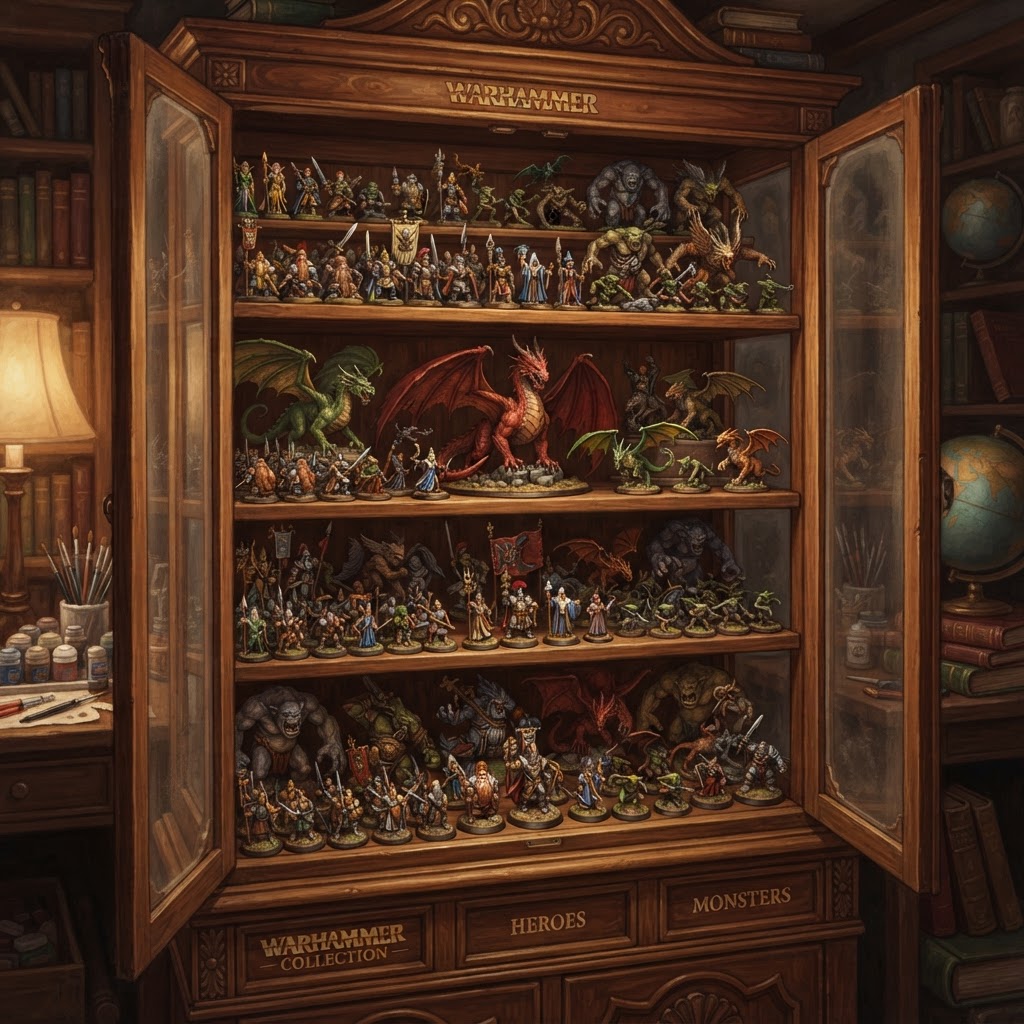
Painted miniatures are fragile. Foam-lined carrying cases protect them on the move, and display cabinets with glass doors keep dust off while showing them off. Avoid direct sunlight, which can fade paint over years, and keep metal figures dry to prevent oxidation.
If you collect unpainted metal, a compartmented box with soft dividers keeps figures from rubbing together and chipping. Label your boxes — a collection you cannot identify is a collection half its value.
Starting Your Collection
Start with what you love. A collection built around your actual campaigns — the heroes you have played, the monsters you have fought — has a story behind every figure, and that story is what makes a collection meaningful rather than merely accumulated.
Set a budget and stick to it. Miniature collecting can expand to fill any wallet, and the joy is in the figures you choose, not the number you own. A curated shelf of twenty figures you love will give more pleasure than a cupboard of two hundred you do not remember buying.