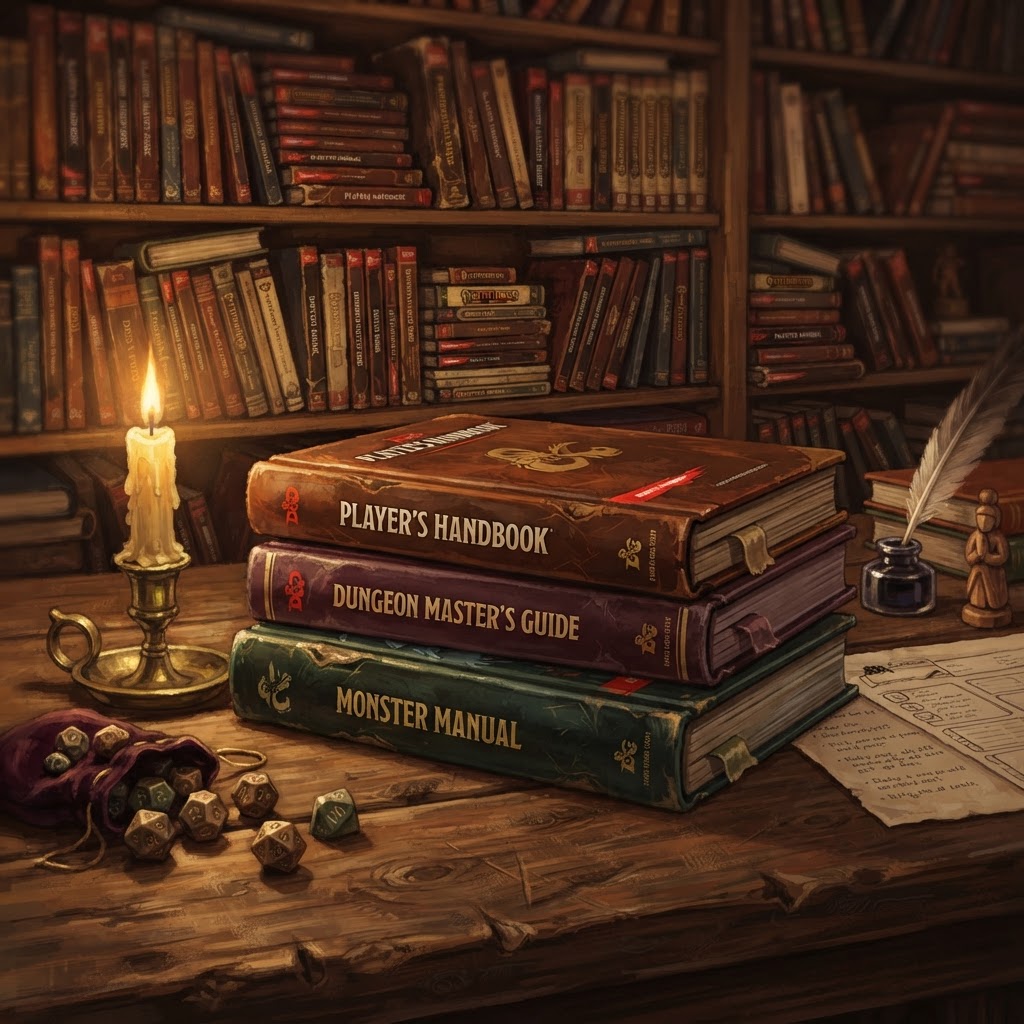
The Core Rulebooks
Three books form the heart of the game, and for most tables they are all you ever need. The Player's Handbook contains the rules for creating and playing characters. The Dungeon Master's Guide contains advice, optional rules, and tools for building worlds and adventures. The Monster Manual is a bestiary of creatures to populate them.
If you are a player, the Player's Handbook is the one essential purchase. If you are the DM, you will want all three eventually, but start with the Player's Handbook and the Monster Manual — you can run a great campaign for months with just those two.
Supplemental Books
Beyond the core three, supplemental rulebooks expand player options. Titles like Xanathar's Guide to Everything, Tasha's Cauldron of Everything, and others add new subclasses, spells, feats, and optional rules. They are not necessary, but they deepen the game for players who want more choices.
Do not buy these on day one. Play with the core rules first, find out what your table enjoys, and add supplements only when you feel the core options are no longer enough. A library built this way is one where every book gets used.
A book you never open is not a library — it is a shelf. Buy the book you will read, not the one you might read.
Adventures and Modules
Pre-written adventures — published modules — give a DM a ready-made campaign to run. They range from short one-shots to multi-year campaigns, and they are an enormous time-saver for DMs who want to play without spending hours on prep.
Modules are also excellent teaching tools. Running one shows you how a professional adventure is structured, which improves your own writing when you start creating your own. Start with a shorter adventure to learn the rhythm before committing to a campaign-length book.
Third-Party Resources
The D&D ecosystem extends well beyond official books. Independent publishers produce adventures, settings, monster books, and player options under the Open Gaming Licence, and many of these rival or exceed official material in quality.
Look for reviews and community recommendations before you buy. A good third-party adventure can be a highlight of your campaign; a poor one can derail it. The D&D community is vocal and honest, and a few minutes of research will steer you toward the gems.
Building Your Library
Your D&D library should grow with your game, not ahead of it. Start with the Player's Handbook, add the Monster Manual when you start running games, and pick up the Dungeon Master's Guide when you are ready to build your own worlds. From there, let your table's needs guide every purchase.
Many of these books are available from UK game shops and online retailers, and second-hand copies of older editions and adventures can be found with patience. A worn copy with someone else's margin notes is not lesser — it carries the memory of another table's adventures, and that is part of the tradition.