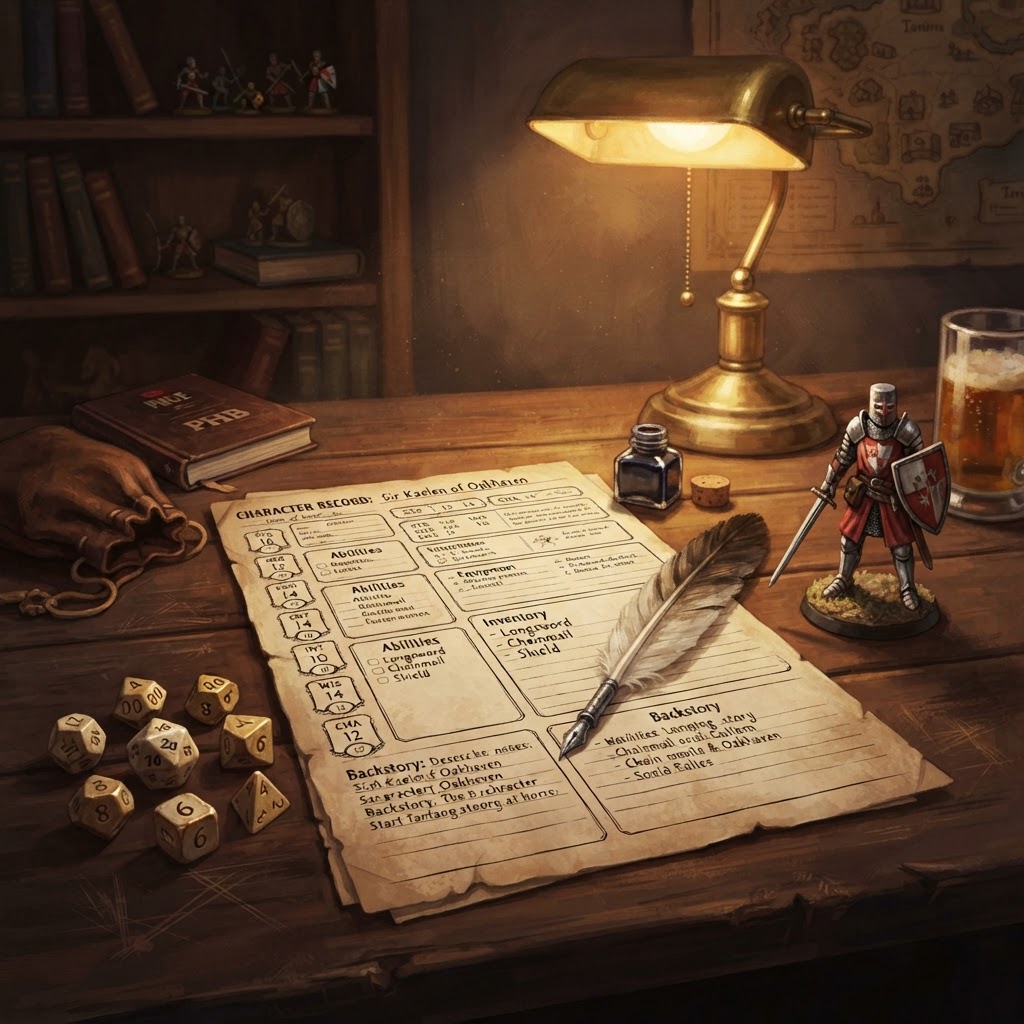
Start with a Concept
Before you touch a rulebook, think about the kind of hero you want to play. Are they a reluctant wanderer, a battle-hardened soldier, a curious scholar? A single sentence is enough: 'a half-elf rogue who grew up on the streets and is trying to go straight.' This concept will guide every choice that follows.
Do not worry about building the strongest character. The most memorable heroes are the ones with a clear personality and a flaw or two. Perfection is forgettable; contradiction is compelling.
Choose Your Race
Your character's race (also called lineage or ancestry) determines their innate traits — darkvision, movement speed, resistance to certain damage. Humans are versatile, dwarves are sturdy, elves are graceful, and tieflings carry a touch of the infernal.
Each race offers a handful of sub-options that refine the flavour. A high elf studies arcane magic; a wood elf moves silently through the forest. Pick the one that sparks your imagination, not the one with the best numbers.
Choose Your Class
Your class is your character's profession — it determines how they fight, what abilities they gain, and how they contribute to the party. Fighters are masters of weapons, rogues rely on cunning and precision, wizards bend reality with spells, and clerics channel divine power to heal and protect.
If you are new, consider a martial class like fighter or rogue for a gentler learning curve. Spellcasters open up as you grow more comfortable with the rules.
There is no wrong choice. A character you are excited to play is always the right pick.
Roll Your Ability Scores
D&D uses six ability scores: Strength, Dexterity, Constitution, Intelligence, Wisdom, and Charisma. These numbers measure how capable your hero is in each area. You can roll for them, use a standard array of fixed values, or spend a pool of points — ask your DM which method the table prefers.
Once you have your scores, assign your highest to the ability your class relies on most. A fighter wants high Strength or Dexterity; a wizard needs Intelligence; a cleric needs Wisdom. Constitution matters for everyone — it determines how much punishment you can take.
Write a Backstory
A backstory does not need to be a novel. Three or four sentences about where your character came from, what they want, and what they have lost is plenty. The best backstories give the Dungeon Master something to work with — a missing sibling, a debt, an enemy, a promise.
Leave room for the campaign to fill in the gaps. Your character's story truly begins at the table, not on the page you write before session one.
Equip and Finalise
Your class and background provide a starting package of weapons, armour, and tools. Choose equipment that fits your concept, calculate your Armour Class and hit points, pick a few personality traits from the lists provided, and you are ready.
Remember that a character sheet is a living document. You will add to it, erase from it, and cross things out as the campaign unfolds. That worn and scribbled sheet is the sign of a hero worth playing.