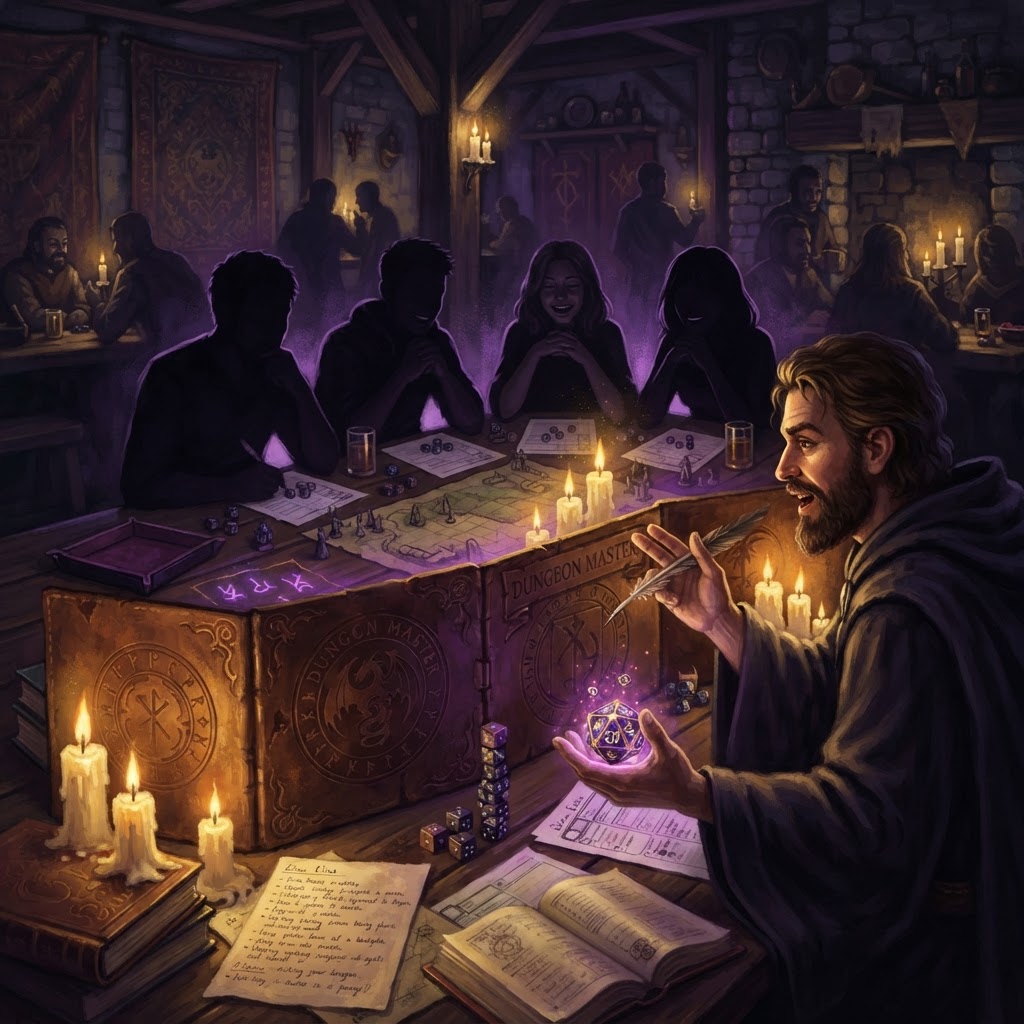
Start with Session Zero
Before the first dice roll, gather your players for a session zero. This is a conversation, not a game. Discuss what kind of campaign everyone wants — heroic fantasy, gritty survival, political intrigue — and set expectations about tone, content, and scheduling.
Session zero is also when players make characters together. This avoids the party of four lone wolves with nothing in common, and it lets you weave their backstories into the world before play begins. An hour spent here saves sessions of friction later.
A campaign is a shared story. Session zero is where you agree on what kind of story it will be.
Preparing Your First Session
Over-preparation is the trap every new DM falls into. You do not need a fully detailed world, a five-page backstory for every tavern keeper, or a map of every street. You need a starting location, a clear hook, and three or four scenes you expect to happen.
Prepare situations, not plots. A plot assumes the players will do a specific thing; a situation presents a problem and lets them solve it however they choose. The players will always surprise you — preparation that expects that is preparation that survives contact with the table.
Running the Game
At the table, your job is to describe, ask, and adjudicate. Paint the scene with a sentence or two, then ask what the players do. When they attempt something uncertain, call for a roll. When the rules are unclear, make a ruling and keep the game moving — you can look it up after the session.
Narrate failure as story, not punishment. A missed attack is not 'nothing happens' — it is a near thing, a parried blow, a stumble. Failure that moves the story forward keeps the energy up even when the dice are unkind.
Managing Pacing
Pacing is the rhythm of the game, and it is mostly your responsibility. If a scene is dragging — a long shopping trip, a rules debate, a conversation that has run its course — find a way to move on. Summarise, fast-forward, or introduce a new element.
Conversely, when the party is engaged, let the moment breathe. A tense negotiation or a dramatic reveal deserves space. Reading the room is the most valuable skill a DM develops, and it comes only with practice.
Handling the Unexpected
Players will ignore your carefully prepared path, befriend the villain, and ask questions about a detail you invented on the spot. This is not a failure — it is the game working as intended. Say yes to their creativity, build on their ideas, and let the story grow in directions you did not plan.
When you genuinely do not know what happens next, be honest. Take a moment, think out loud if you are comfortable, or call a short break. Your players would rather you pause for a minute than soldier on with something flat. They are on your side.